Download Gender Pay Gap report (pdf, 148.7kb)

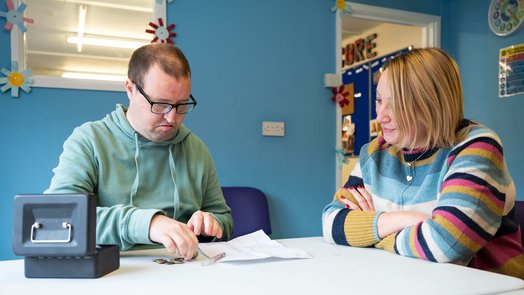
People Block
Single person left image test


Desc
 Address and contact information
87A Urquhart Road
Old Aberdeen
Aberdeen
Aberdeenshire
AB24 5ND
Telephone:01224 039264
We will be in contact shortly.

This is a test of the download component ipsum dolor sit amet, consectetur adipiscing elit. Fusce erat justo, lobortis ac accumsan id, pellentesque in nunc. Maecenas ex elit, consequat ut fermentum et, aliquet sit amet sapien. Nulla est leo, pulvinar at malesuada ac, auctor sit amet sapien. Sed non hendrerit neque, sit amet aliquam velit.
 Download Download Component Test (jpeg, 38.0kb)

Easy ready card which is a WYSIWYG
A Disabled Persons Trust (DPT) also known as a Vulnerable Person’s Trust, is a trust which is usually set up for the benefit of a family member who has a disability or learning difficulties.
A DPT protects vulnerability as well as means tested benefits and support.
If your loved one is vulnerable or lacks capacity, setting up a DPT, can ensure that your child or family member’s future needs are protected in a tax-efficient way, whilst making sure any means tested benefits, they are currently receiving are not at risk of being stopped in the event of your death.
Families tend to think that because their loved one is disabled, and because there is a tax efficient trust called a Disabled Persons Trust, it must be the right choice for them. However, there are a number of factors that need to be considered before deciding which type of Trust to use, depending on your family circumstances. This includes the age of the disabled or vulnerable person, the nature and the long-term prognosis of any disability and the value of assets transferred into the trust. The needs of the family member who has a disability or learning difficulties will also need to considered, for example, where they are likely to live, who will care for them, how the carers will be compensated and the needs of other family members.
Whilst a DPT can offer potential tax advantages the savings in tax depend on a number of factors. This includes; the size of the taxable estate, the level of the beneficiary’s other income and the value of the trust fund, as well as how long the fund is likely to run for, and how it will be managed and used. Whilst Affinity Trust offer a DPT option different conditions apply to each type of DPT and need to be tailored to suit each person’s individual circumstances. We strongly advise potential settlors to seek specialist legal advice to talk through their family circumstances and discuss all their options when considering including a trust of this nature in their Will.
Yes. The main advantage of a DPT over a Discretionary Trust is the favourable tax treatment it receives for Inheritance Tax, Income Tax and Capital Gains Tax. A DPT can be a tax-efficient solution when passing on assets to your beneficiaries, ensuring they’re not left with a large inheritance tax bill. Their entitlement to state support or benefit isn’t affected by their inheritance, for example disability support or help with care home fees. A common way to create a DPT is to incorporate it into your Will. This can give you peace of mind that your beneficiaries will be taken care of after you are gone.
In order to qualify for the favourable tax treatment, the Trust must provide that during the disabled person’s life, the income and capital will be entirely used for the benefit of the disabled person. This is subject to a small exception that either £3,000 or 3% (whichever is the least) of the value of the trust fund (either income or capital) can be applied to another beneficiary of the Trust in each tax year. If these conditions are met, the Trust will not incur any charges to Inheritance Tax when payments are made from the Trust and the ten yearly Inheritance Tax charges incurred by a Discretionary Trust will not apply.
Trustees are the legal owners of the trust fund and responsible for the assets (which might include money and/or property) held in trust. They are legally bound to deal with the trust fund in accordance with the terms of the trust as set out in the Will. They manage the trust and make decisions as to how the trust fund is managed and spent.
You need between 2 and 4 people to be trustees. When considering who to appoint as trustees it is useful to have a mix of people, including:
and are concerned with their welfare
Non-professional trustees, perhaps a relative or friend who knows the disabled person well, cannot charge for their time and are entitled only to expenses. Parents need to be aware of the possibility that a conflict of interest where trustees are also family members and beneficiaries of the trust. Professional trustees are usually solicitors but can also be an accountant or trust corporation. If appointed they will require payment for their time, usually met as an expense out of the trust. You may wish to pay a professional trustee if you want a trustee who knows how to manage a trust legally or you do not have any family or friends that you think could manage a trust well.
A will trust is an arrangement which comes into effect on your death, granting the named trustee’s control over assets on behalf of others (called the ‘beneficiaries’). You might specify what the trust provides each beneficiary, or let the trustees have discretion over how and when they distribute funds.
It’s possible to create both a Will and a Trust, and in many cases, they’ll complement each other. However, if there are any issues or conflicts between the two, the Trust will normally override the Will – not the other way around.
By appointing a qualified solicitor https://solicitors.lawsociety.org.uk/
Or finding free or affordable legal help https://www.citizensadvice.org.uk/law-and-courts/legal-system/finding-free-or-affordable-legal-help/
Alternatively, using our trusted partner Bequeathed https://www.bequeathed.org/affinitytrust
Led by a former solicitor and an accountant, bequeathed provides its unique will-writing software to over 140 UK based charity’s. All legal advice is provided by one of its accredited firms (“Legal Firms”) or by its own in-house legal team to ensure there is always advice available. Legal firms are either regulated or run by a solicitor who is regulated by The Solicitors Regulation Authority (SRA), the regulatory body for solicitors in England and Wales or by a Trusts & Estates Practitioner who is subject to the STEP Code of Conduct and Code for Will Preparation. Each legal firm has a minimum of £2m professional indemnity insurance. Bequeathed is registered with both the Fundraising Regulator and the Information Commissioner’s Office.
The exact cost of setting up a DPT will depend on how much legal advice you will need and how long it will take your solicitor to draft the precise wording. The average cost of creating a simple trust in the UK is in the region of £1,000 – £1,500. Affinity Trust have negotiated a preferential rate for the families we support with our trusted partner Bequeathed as follows:
Supported living is a way of providing support that allows people to live independently in their own homes or in shared accommodations. It's all about empowering people to have control over their own lives.
We understand that everyone's needs are unique, which is why our support ranges from just a few hours a day to round-the-clock care for individuals with complex needs.
In supported living, people have the freedom to choose whether they'd like to share support with others or have individual support tailored just for them.
With supported living, people are empowered to:
Our dedicated staff don't have an office or designated space within your property, except for the occasional overnight sleep-in when needed.
Our ultimate goal for everyone in supported living is to chase their dreams, nurture their skills, and even find work if they desire. We believe in fostering independence and self-sufficiency to the fullest extent possible.
Lorem ipsum dolor sit amet, consectetur adipiscing elit. Donec sit amet pulvinar libero. Quisque justo magna, tincidunt sit amet bibendum vel, placerat a felis. In in placerat augue. Donec consequat arcu sed risus egestas vestibulum. Nulla tincidunt dolor eget nisl auctor vestibulum. Vestibulum eleifend arcu vel neque tempor luctus.
Sed vehicula est eros, et gravida felis aliquam interdum. Curabitur faucibus venenatis tincidunt. Ut magna lorem, pharetra quis tellus id, ornare malesuada eros. Proin fermentum augue id mi pharetra, vel eleifend ligula semper. Quisque auctor urna sed nisi maximus viverra. Phasellus tincidunt nec magna a ullamcorper. Sed viverra auctor consequat. Etiam vel lacus dolor. Aliquam tincidunt fringilla leo.
A Disabled Persons Trust (DPT) also known as a Vulnerable Person’s Trust, is a trust which is usually set up for the benefit of a family member who has a disability or learning difficulties.
A DPT protects vulnerability as well as means tested benefits and support.
If your loved one is vulnerable or lacks capacity, setting up a DPT, can ensure that your child or family member’s future needs are protected in a tax-efficient way, whilst making sure any means tested benefits, they are currently receiving are not at risk of being stopped in the event of your death.
Families tend to think that because their loved one is disabled, and because there is a tax efficient trust called a Disabled Persons Trust, it must be the right choice for them. However, there are a number of factors that need to be considered before deciding which type of Trust to use, depending on your family circumstances. This includes the age of the disabled or vulnerable person, the nature and the long-term prognosis of any disability and the value of assets transferred into the trust. The needs of the family member who has a disability or learning difficulties will also need to considered, for example, where they are likely to live, who will care for them, how the carers will be compensated and the needs of other family members.
Whilst a DPT can offer potential tax advantages the savings in tax depend on a number of factors. This includes; the size of the taxable estate, the level of the beneficiary’s other income and the value of the trust fund, as well as how long the fund is likely to run for, and how it will be managed and used. Whilst Affinity Trust offer a DPT option different conditions apply to each type of DPT and need to be tailored to suit each person’s individual circumstances. We strongly advise potential settlors to seek specialist legal advice to talk through their family circumstances and discuss all their options when considering including a trust of this nature in their Will.
Yes. The main advantage of a DPT over a Discretionary Trust is the favourable tax treatment it receives for Inheritance Tax, Income Tax and Capital Gains Tax. A DPT can be a tax-efficient solution when passing on assets to your beneficiaries, ensuring they’re not left with a large inheritance tax bill. Their entitlement to state support or benefit isn’t affected by their inheritance, for example disability support or help with care home fees. A common way to create a DPT is to incorporate it into your Will. This can give you peace of mind that your beneficiaries will be taken care of after you are gone.
In order to qualify for the favourable tax treatment, the Trust must provide that during the disabled person’s life, the income and capital will be entirely used for the benefit of the disabled person. This is subject to a small exception that either £3,000 or 3% (whichever is the least) of the value of the trust fund (either income or capital) can be applied to another beneficiary of the Trust in each tax year. If these conditions are met, the Trust will not incur any charges to Inheritance Tax when payments are made from the Trust and the ten yearly Inheritance Tax charges incurred by a Discretionary Trust will not apply.
Trustees are the legal owners of the trust fund and responsible for the assets (which might include money and/or property) held in trust. They are legally bound to deal with the trust fund in accordance with the terms of the trust as set out in the Will. They manage the trust and make decisions as to how the trust fund is managed and spent.
You need between 2 and 4 people to be trustees. When considering who to appoint as trustees it is useful to have a mix of people, including:
and are concerned with their welfare
Non-professional trustees, perhaps a relative or friend who knows the disabled person well, cannot charge for their time and are entitled only to expenses. Parents need to be aware of the possibility that a conflict of interest where trustees are also family members and beneficiaries of the trust. Professional trustees are usually solicitors but can also be an accountant or trust corporation. If appointed they will require payment for their time, usually met as an expense out of the trust. You may wish to pay a professional trustee if you want a trustee who knows how to manage a trust legally or you do not have any family or friends that you think could manage a trust well.
A will trust is an arrangement which comes into effect on your death, granting the named trustee’s control over assets on behalf of others (called the ‘beneficiaries’). You might specify what the trust provides each beneficiary, or let the trustees have discretion over how and when they distribute funds.
It’s possible to create both a Will and a Trust, and in many cases, they’ll complement each other. However, if there are any issues or conflicts between the two, the Trust will normally override the Will – not the other way around.
By appointing a qualified solicitor https://solicitors.lawsociety.org.uk/
Or finding free or affordable legal help https://www.citizensadvice.org.uk/law-and-courts/legal-system/finding-free-or-affordable-legal-help/
Alternatively, using our trusted partner Bequeathed https://www.bequeathed.org/affinitytrust
Led by a former solicitor and an accountant, bequeathed provides its unique will-writing software to over 140 UK based charity’s. All legal advice is provided by one of its accredited firms (“Legal Firms”) or by its own in-house legal team to ensure there is always advice available. Legal firms are either regulated or run by a solicitor who is regulated by The Solicitors Regulation Authority (SRA), the regulatory body for solicitors in England and Wales or by a Trusts & Estates Practitioner who is subject to the STEP Code of Conduct and Code for Will Preparation. Each legal firm has a minimum of £2m professional indemnity insurance. Bequeathed is registered with both the Fundraising Regulator and the Information Commissioner’s Office.
The exact cost of setting up a DPT will depend on how much legal advice you will need and how long it will take your solicitor to draft the precise wording. The average cost of creating a simple trust in the UK is in the region of £1,000 – £1,500. Affinity Trust have negotiated a preferential rate for the families we support with our trusted partner Bequeathed as follows:

Form pre-text.
Fields marked * are required


This is the description field

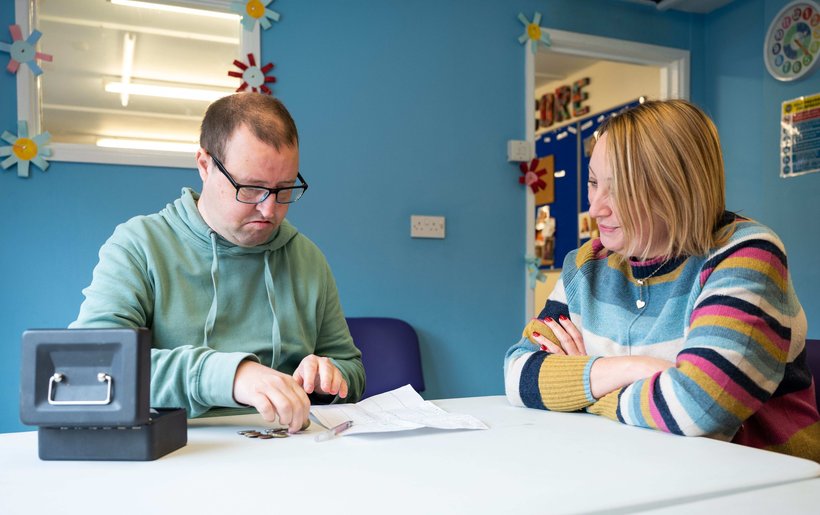

description test

Single person left image test

Leo qualified as a social worker and started his career in the public sector, moving into the not-for-profit sector in the 1980s.
He then held senior roles with the Richmond Fellowship, Disability Action Yorkshire, Mencap and Mind, before joining Affinity Trust as Chief Executive in 2006.
When Leo joined Affinity Trust, we were known by our original name of the Thames and Chiltern Trust. Under Leo’s leadership, the organisation rebranded as Affinity Trust and has since increased the number of people it supports from around 400 in 2006 to more than 900 in 2020.
Over the same period, our annual income rose from £11m to over £50m. We now work in 34 local authority areas across England and Scotland.
Leo is a keen runner; in both 2017 and 2018 he completed the Great North Run, raising money for some of our local services.
Single person right image test
Leo qualified as a social worker and started his career in the public sector, moving into the not-for-profit sector in the 1980s.
He then held senior roles with the Richmond Fellowship, Disability Action Yorkshire, Mencap and Mind, before joining Affinity Trust as Chief Executive in 2006.
When Leo joined Affinity Trust, we were known by our original name of the Thames and Chiltern Trust. Under Leo’s leadership, the organisation rebranded as Affinity Trust and has since increased the number of people it supports from around 400 in 2006 to more than 900 in 2020.
Over the same period, our annual income rose from £11m to over £50m. We now work in 34 local authority areas across England and Scotland.
Leo is a keen runner; in both 2017 and 2018 he completed the Great North Run, raising money for some of our local services.
Category test
Leo qualified as a social worker and started his career in the public sector, moving into the not-for-profit sector in the 1980s. He then …
Continue reading
Leo qualified as a social worker and started his career in the public sector, moving into the not-for-profit sector in the 1980s.
He then held senior roles with the Richmond Fellowship, Disability Action Yorkshire, Mencap and Mind, before joining Affinity Trust as Chief Executive in 2006.
When Leo joined Affinity Trust, we were known by our original name of the Thames and Chiltern Trust. Under Leo’s leadership, the organisation rebranded as Affinity Trust and has since increased the number of people it supports from around 400 in 2006 to more than 900 in 2020.
Over the same period, our annual income rose from £11m to over £50m. We now work in 34 local authority areas across England and Scotland.
Leo is a keen runner; in both 2017 and 2018 he completed the Great North Run, raising money for some of our local services.
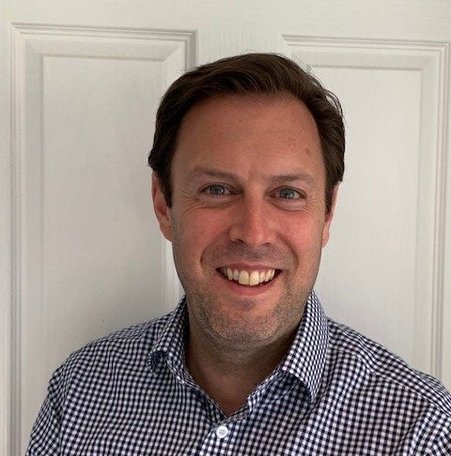
Andrew joined Affinity Trust in 2020, where he is Director of Operations. He has 20 years’ of experience working in the public sector and …
Continue reading
Andrew joined Affinity Trust in 2020, where he is Director of Operations.
He has 20 years’ of experience working in the public sector and not-for-profit organisations. After starting his career as an Intelligence Analyst for the police, Andrew has held senior positions in local government, housing associations, and, since 2015, adult social care. In addition to operational leadership, Andrew’s areas of expertise include performance and process improvement, business planning and leading programme management functions.
When not working, Andrew enjoys spending time with friends and family, running, and wishing that one day, a team from Bristol will finally reach the Premier League! He is also on a quest to create what he thinks is the perfect curry…
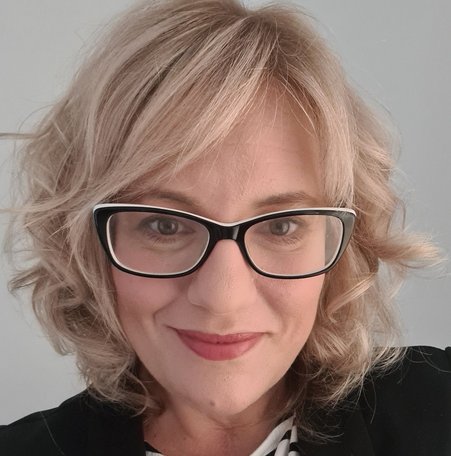
Sarah has more than 25 years of experience in business development, income generation, and strategic marketing and engagement within the ch…
Continue reading
Sarah has more than 25 years of experience in business development, income generation, and strategic marketing and engagement within the charitable and social care sectors, both in the US and UK. She is passionate about expanding opportunities and impact to improve the quality of life for people with learning disabilities and autism.
Sarah joined Affinity Trust in 2022 and oversees the Development and Innovation team, which includes tender writing, innovation, fundraising, communications and digital, and the development and implementation of new services and models.
When Sarah is not dreaming of new opportunities and making exciting things happen, you can find her on a yoga mat, walking her two rescue dogs with her partner, or standing on muddy pitches watching her nearly grown boys play sport near Bath.
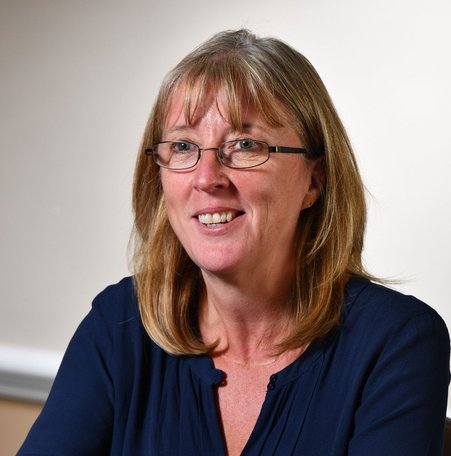
Donna has worked in social care for over 30 years; she is a qualified social worker although has always worked in the support sector for no…
Continue reading
Donna has worked in social care for over 30 years; she is a qualified social worker although has always worked in the support sector for not-for-profit organisations.
She began her career as a support worker with people learning disabilities and since has undertaken many roles including Registered Manager and Regional Manager. Her work in a range of different settings and roles, including supporting people to move from hospital into their community, has given her a broad understanding of the sector and its challenges, while still remaining close to the core purpose – supporting people with learning disabilities to lead the life they want.
Donna has worked for Affinity Trust since 2012 as Director of Operations and Quality and in 2023 moved into her current position as Director of Quality Improvement and Compliance.
She says: “I am passionate about people with learning disabilities/autism having choice and control and being supported by staff who are person-centered and deliver high quality support, which enables people to have amazing lives”

Chief Executive
Leo qualified as a social worker and started his career in the public sector, moving into the not-for-profit sector in the 1980s.
He then held senior roles with the Richmond Fellowship, Disability Action Yorkshire, Mencap and Mind, before joining Affinity Trust as Chief Executive in 2006.
When Leo joined Affinity Trust, we were known by our original name of the Thames and Chiltern Trust. Under Leo’s leadership, the organisation rebranded as Affinity Trust and has since increased the number of people it supports from around 400 in 2006 to more than 900 in 2020.
Over the same period, our annual income rose from £11m to over £50m. We now work in 34 local authority areas across England and Scotland.
Leo is a keen runner; in both 2017 and 2018 he completed the Great North Run, raising money for some of our local services.
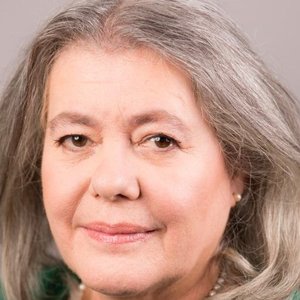

Position Name
Tanya joined our board of trustees as Chair Elect in June 2019, taking on the role of Chair in September.
Between 2013 and 2019, Tanya had been Chief Executive of Plan UK. Previously she had been International Director at Leonard Cheshire Disability.
Tanya’s career began as a special needs teacher, and then a lecturer in Politics and Philosophy. She joined VSO in 1989, becoming their Head of Programmes for Eastern Europe and the CIS.
After three years with the European Children’s Trust, Tanya was appointed as the first CEO of Home-Start International in 1999. During this period she was seconded to Brussels to manage a grant-making facility for the European Commission. Between 1995 and 2002, she was the Chair of the UNICEF NGO Committee for CEEC/CIS in Geneva.
Tanya has co-authored various papers and edited two LCD books, Disability and Inclusive Development and Poverty and Disability. In 2003, she was given the European Woman of Achievement (Humanitarian) award. In 2016, she was awarded an OBE in the Queen’s Birthday Honours for helping to provide safe education for girls internationally
Test pull quote no image

Description field
Latest review:
Latest inspection:
Report published:


Intro paragraph - Lorem ipsum dolor sit amet, consectetur21 adipiscing elit, sed do eiusmod tempor incididunt ut labore et dolore magna aliqua. Ut enim ad minim veniam, quis nostrud exercitation ullamco laboris nisi ut aliquip ex ea commodo consequat. Duis aute irure dolor in reprehenderit in voluptate velit esse cillum dolore eu fugiat nulla pariatur.
Body paragraph - Lorem ipsum dolor sit amet, consectetur21 adipiscing elit, sed do eiusmod tempor incididunt ut labore et dolore magna aliqua. Ut enim ad minim veniam, quis nostrud exercitation ullamco laboris nisi ut aliquip ex ea commodo consequat. Duis aute irure dolor in reprehenderit in voluptate velit esse cillum dolore eu fugiat nulla pariatur.
Share this page



Content for step 1
Content for step 2, no image
Content for step 3

A Generic text plugin, is this needed?

YouTube video test
Newsletter signup test